
By CityLaila Travel Team
Updated March 2026
11 min read
Discover the World with CityLaila
The UAE is known for futuristic cities, luxury resorts, vast deserts and world-class attractions, but the country also offers travellers many opportunities to explore its natural environments, cultural heritage and wildlife more responsibly.
From kayaking through mangrove forests and visiting protected desert areas to exploring traditional communities and choosing environmentally conscious accommodation, sustainable tourism in the UAE is becoming an increasingly important part of the country’s travel landscape.
For travellers planning a UAE holiday in 2026, responsible travel does not mean giving up memorable experiences. Instead, it can mean choosing activities that support conservation, respect local culture, reduce environmental impact and contribute to local communities.
This guide explores some of the best sustainable tourism experiences in the UAE, along with practical tips for planning a more responsible holiday.
What Is Sustainable Tourism?
Sustainable tourism means travelling in a way that considers the long-term environmental, cultural and economic impact of tourism.
In the UAE, this can include:
- Protecting wildlife and natural habitats
- Conserving water and energy
- Supporting local communities and businesses
- Preserving Emirati heritage
- Reducing waste and single-use plastics
- Choosing responsible wildlife experiences
- Respecting protected areas
- Using public transport where practical
- Avoiding damage to natural environments
The UAE has introduced several initiatives focused on environmental conservation, sustainable development and responsible tourism. Abu Dhabi, for example, has developed protected natural areas covering significant marine and terrestrial habitats. (ead.gov.ae)
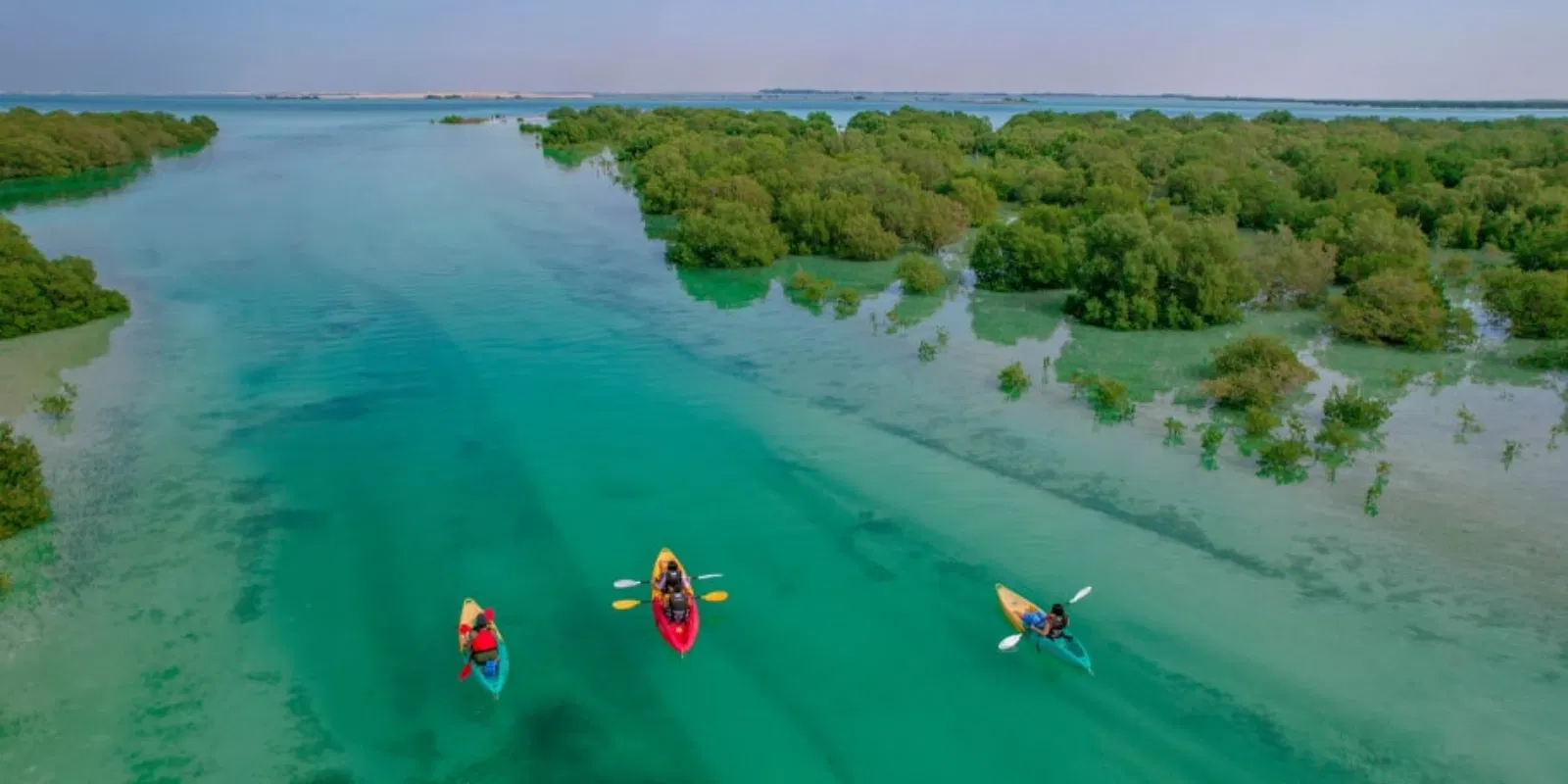
1. Explore Abu Dhabi’s Mangroves by Kayak
Mangrove ecosystems are among the UAE’s most important coastal habitats.
Mangrove kayaking in Abu Dhabi allows visitors to explore these ecosystems while learning about their role in coastal protection, biodiversity and carbon storage.
The mangroves provide habitats for fish, birds and other marine species. Abu Dhabi’s environmental authority manages protected areas and conservation programmes covering mangrove ecosystems across the emirate. (ead.gov.ae)
Responsible kayaking tips
- Stay on designated routes.
- Do not disturb birds or marine animals.
- Avoid touching or damaging mangrove roots.
- Take all rubbish with you.
- Choose operators that follow environmental guidelines.
Best for: Nature lovers, photographers, families and adventure travellers.
2. Visit the UAE’s Protected Natural Areas
The UAE has established protected areas to conserve important ecosystems and wildlife.
Abu Dhabi’s protected-area network includes terrestrial and marine environments, including mangroves, wetlands, coastal habitats and desert landscapes. (ead.gov.ae)
These destinations provide opportunities for responsible wildlife observation, photography and nature education.
When visiting protected areas, travellers should follow marked routes and local regulations.
3. Experience the Desert Responsibly
The UAE’s desert is one of its most distinctive natural landscapes.
Traditional desert experiences can include:
- Camel rides
- Desert camping
- Wildlife observation
- Sandboarding
- Dune drives
- Stargazing
- Sunrise and sunset experiences
For a more sustainable desert experience, consider operators that demonstrate responsible practices, avoid unnecessary disturbance to wildlife and manage waste carefully.
How to reduce your desert impact
- Never leave litter behind.
- Avoid collecting plants, rocks or other natural materials.
- Do not disturb wildlife.
- Stay within permitted areas.
- Use reusable water bottles.
- Choose camps with responsible waste and energy practices.
4. Visit Al Ain Oasis
Al Ain Oasis provides an opportunity to learn about traditional agricultural practices and the UAE’s historic relationship with water.
The oasis forms part of the Al Ain Cultural Sites, which are recognised as a UNESCO World Heritage property.
Its traditional falaj irrigation system demonstrates how communities historically distributed water to support agriculture in the arid environment.
Exploring the oasis allows travellers to combine cultural tourism with an understanding of traditional water management.
Best for: History lovers, families, photographers and cultural travellers.
5. Explore UAE Heritage and Traditional Villages
Sustainable tourism isn’t limited to nature.
Supporting cultural heritage is another important part of responsible travel. Visitors can explore traditional neighbourhoods, heritage villages, museums, souks and cultural centres throughout the UAE.
Experiences may include:
- Traditional crafts
- Emirati cuisine
- Falconry heritage
- Pearl-diving history
- Traditional architecture
- Arabic coffee and dates
- Local storytelling
- Heritage demonstrations
Spending money on locally operated experiences can help keep traditional crafts and cultural practices visible to visitors.
6. Discover the UAE’s Pearl-Diving Heritage
Before the discovery of oil transformed the UAE’s economy, pearl diving and maritime trade played an important role in the livelihoods of coastal communities.
Travellers can learn about this history through museums, heritage areas and cultural programmes.
Responsible cultural tourism means approaching these traditions respectfully rather than treating them simply as entertainment.
Look for experiences that explain the history and significance of pearl diving while supporting museums, cultural institutions and local guides.
7. Explore Ras Al Khaimah’s Mountain Landscapes
Ras Al Khaimah offers a different side of the UAE, with the Hajar Mountains, hiking trails, wadis and desert landscapes.
Outdoor activities can include:
- Hiking
- Mountain sightseeing
- Camping
- Nature photography
- Guided walks
When exploring mountain environments, stay on established trails where available and avoid leaving waste behind.
Responsible hiking checklist
Bring:
- Reusable water bottle
- Sun protection
- Appropriate footwear
- Small rubbish bag
- Navigation equipment
- Sufficient water
Avoid removing plants, rocks or other natural materials.
8. Explore Fujairah’s Marine Environment
Fujairah’s location along the Gulf of Oman makes it popular for snorkelling, diving and marine experiences.
Visitors can encounter coral communities, fish and other marine life in suitable locations.
Responsible marine tourism means:
- Never touching coral
- Avoiding feeding marine animals
- Maintaining appropriate distance from wildlife
- Using reef-safe practices where appropriate
- Taking rubbish back with you
- Choosing responsible dive and snorkelling operators
A healthy marine environment benefits both biodiversity and the communities and tourism businesses that depend on it.
9. Visit Wildlife Conservation Centres
The UAE is home to a range of wildlife conservation and educational initiatives.
Visitors can learn about:
- Arabian oryx
- Gazelles
- Sea turtles
- Birds
- Marine species
- Desert ecosystems
When choosing a wildlife attraction, look for organisations that clearly explain their conservation, rehabilitation or educational programmes.
Responsible wildlife tourism
Choose experiences where:
- Animals are not unnecessarily handled.
- Visitors are not encouraged to feed wildlife.
- Animal habitats are appropriate.
- Conservation or education is clearly part of the programme.
10. Explore Wetlands and Bird Habitats
The UAE’s coastal wetlands provide important habitats for migratory and resident birds.
Ras Al Khor Wildlife Sanctuary in Dubai is a notable example. Located close to the city’s urban centre, the protected wetland attracts large numbers of birds, particularly during migration seasons.
Visitors can observe wildlife from designated viewing areas without entering sensitive habitats.
This is a good example of how urban development and nature conservation can exist alongside one another.
11. Choose Eco-Conscious UAE Accommodation
Where you stay can influence the environmental footprint of your trip.
When booking a hotel or resort, look for information about:
- Energy-efficient systems
- Renewable energy
- Water conservation
- Waste reduction
- Recycling
- Sustainable food sourcing
- Plastic reduction
- Local employment
- Environmental certifications
Some UAE resorts have introduced conservation programmes, renewable-energy initiatives and water-saving measures.
Instead of choosing accommodation solely based on luxury facilities, travellers interested in sustainable tourism can also consider how a property manages its environmental responsibilities.
12. Choose Sustainable Transportation
Transportation is an important part of responsible travel.
In Dubai, the Metro, tram and public bus network can reduce the need for private vehicle journeys. The city’s public transportation system provides connections between major areas and attractions.
Where practical:
- Use the Metro or buses.
- Walk short distances.
- Share transfers.
- Use taxis only when necessary.
- Combine nearby attractions in one itinerary.
For multi-emirate trips, consider grouping destinations geographically to reduce unnecessary driving.
13. Support Local Food and Businesses
Eating local food is another way to make your trip more meaningful.
Try traditional dishes such as:
- Machboos
- Harees
- Thareed
- Luqaimat
- Balaleet
- Emirati-style grilled dishes
Choose local restaurants, independent cafés and traditional markets where possible.
Supporting local businesses helps tourism spending reach the communities and entrepreneurs that contribute to the destination’s economy.
14. Reduce Plastic and Travel Waste
Small decisions can make a difference during a UAE holiday.
Carry:
- Reusable water bottle
- Reusable shopping bag
- Refillable toiletries
- Reusable coffee cup
Avoid unnecessary single-use plastic and dispose of waste responsibly.
The UAE has also introduced various initiatives aimed at reducing single-use plastic consumption and encouraging more sustainable practices.
15. Choose Sustainable Desert and Adventure Operators
Before booking a desert safari, kayaking trip, wildlife tour or other outdoor activity, research the operator.
Consider asking:
- Does the company have environmental policies?
- How does it manage waste?
- Does it respect wildlife?
- Are group sizes controlled?
- Does it employ local guides?
- Does it contribute to conservation or local communities?
A lower-impact experience may also provide a more educational and authentic understanding of the destination.
16. Sustainable Tourism Experiences for Families
Sustainable travel can be educational and enjoyable for children.
Family-friendly options include:
- Mangrove kayaking
- Wildlife observation
- Nature walks
- Museums
- Heritage villages
- Al Ain Oasis
- Aquarium visits
- Conservation centres
- Beach clean-up activities
Encourage children to observe rather than touch wildlife, avoid littering and understand why natural habitats need protection.
Best Sustainable Tourism Experiences in the UAE
| Experience | Emirate | Sustainability Focus |
| Mangrove kayaking | Abu Dhabi | Coastal ecosystems |
| Al Ain Oasis | Abu Dhabi | Traditional agriculture and water management |
| Wildlife observation | Dubai/Abu Dhabi | Habitat conservation |
| Mountain hiking | Ras Al Khaimah | Responsible outdoor recreation |
| Diving & snorkelling | Fujairah | Marine environment |
| Heritage villages | Multiple emirates | Cultural preservation |
| Pearl-diving heritage | Coastal UAE | Maritime heritage |
| Desert experiences | Multiple emirates | Desert awareness |
| Public transport sightseeing | Dubai | Lower-impact urban mobility |
| Local food experiences | Multiple emirates | Local businesses and culture |
Best Time for Sustainable Outdoor Experiences
The UAE’s cooler months, generally from October to April, are more comfortable for outdoor activities such as hiking, kayaking, desert exploration and wildlife observation.
During summer, consider indoor cultural attractions and schedule outdoor activities for early morning or evening when conditions permit.
Always check weather conditions and operator guidance before undertaking outdoor activities.
How to Be a Responsible Tourist in the UAE?
Follow these simple principles during your trip:
Respect local culture
Dress appropriately for cultural and religious sites and follow local customs.
Protect nature
Stay on designated paths and avoid disturbing animals and plants.
Reduce waste
Carry reusable items and dispose of rubbish correctly.
Conserve water
Use water responsibly, particularly in hotels and desert environments.
Support local businesses
Choose local restaurants, guides, artisans and experiences.
Choose responsible wildlife experiences
Avoid activities that involve unnecessary animal handling or feeding.
Use public transport
Where practical, use public transportation to reduce unnecessary vehicle journeys.
Leave natural areas as you found them
Do not collect shells, plants, rocks or other natural materials.
Frequently Asked Questions
What is sustainable tourism in the UAE?
Sustainable tourism involves exploring the UAE while minimising environmental impact, respecting local culture, protecting wildlife and supporting local communities and businesses.
What are the best eco-tourism experiences in the UAE?
Mangrove kayaking, wildlife observation, responsible desert experiences, mountain hiking, marine activities, oasis visits and heritage tourism are among the most suitable options.
Where can I experience sustainable tourism in Dubai?
Ras Al Khor Wildlife Sanctuary, responsible desert experiences, public transportation, heritage areas and locally operated cultural experiences provide several opportunities.
Is Abu Dhabi good for eco-tourism?
Yes. Abu Dhabi has extensive mangrove ecosystems, protected areas, wildlife habitats and nature-focused experiences. Its environmental authority manages a network of protected areas across terrestrial and marine environments. (ead.gov.ae)
How can tourists reduce their environmental impact in the UAE?
Use public transportation where practical, reduce single-use plastic, conserve water, avoid disturbing wildlife, stay on designated trails and choose accommodation and tour operators with responsible environmental practices.
Final Thoughts
Sustainable tourism in the UAE offers travellers a way to experience the country’s deserts, mangroves, mountains, marine environments and cultural heritage while being more mindful of their impact.
From mangrove kayaking in Abu Dhabi and hiking in Ras Al Khaimah to exploring Al Ain Oasis and discovering the UAE’s pearl-diving heritage, responsible travel can be both educational and memorable.
The best approach is simple: respect nature, protect wildlife, value local culture, reduce waste and support responsible tourism businesses.
Planning your next UAE holiday? Explore nature experiences, attractions, tours, transfers and holiday packages with CityLaila and create an itinerary that combines the UAE’s iconic attractions with meaningful cultural and nature experiences.
You may also like –
Best Eco-Tourism Experiences in the UAE
Hiking Trails Worth Exploring in the UAE
UAE Heritage Villages Worth Visiting
Discover the UAE’s Pearl Diving Heritage
CityLaila Travel Team
Our travel experts research and curate guides for attractions and experiences across 40+ destinations worldwide.