

By CityLaila Travel Team
Updated March 2026
10 min read
Discover the World with CityLaila
When you think about the United Arab Emirates, futuristic skylines, luxury resorts, vast highways and modern attractions probably come to mind. Beyond the contemporary cities, forgotten settlements tell a very different story.
Across the UAE, abandoned villages, old houses, and deserted settlements preserve memories of life before rapid modernization transformed the country. Communities gradually relocated, while changing economic conditions, harsh environments, and the shift from traditional livelihoods to modern urban life reshaped others.
Travelers often call these places UAE ghost towns, although the term serves mainly as a travel description rather than an official historical classification.
From homes slowly disappearing beneath desert sand to a former pearling village frozen in time, these destinations offer a fascinating glimpse into the UAE’s past.
What Are UAE Ghost Towns?
In the UAE travel context, a “ghost town” generally refers to an abandoned or largely uninhabited settlement where older buildings, homes or other structures remain.
Unlike some famous ghost towns around the world that were abandoned after mining industries collapsed, UAE abandoned settlements often have different stories.
Their history can be connected to:
- Changing economic conditions
- The decline of traditional livelihoods
- Modern urban development
- Relocation to newer settlements
- Difficult environmental conditions
- Improved roads and infrastructure
- Changing access to water and other resources
Several of these locations are now being preserved as heritage and cultural attractions.
1. Al Madam Buried Village, Sharjah
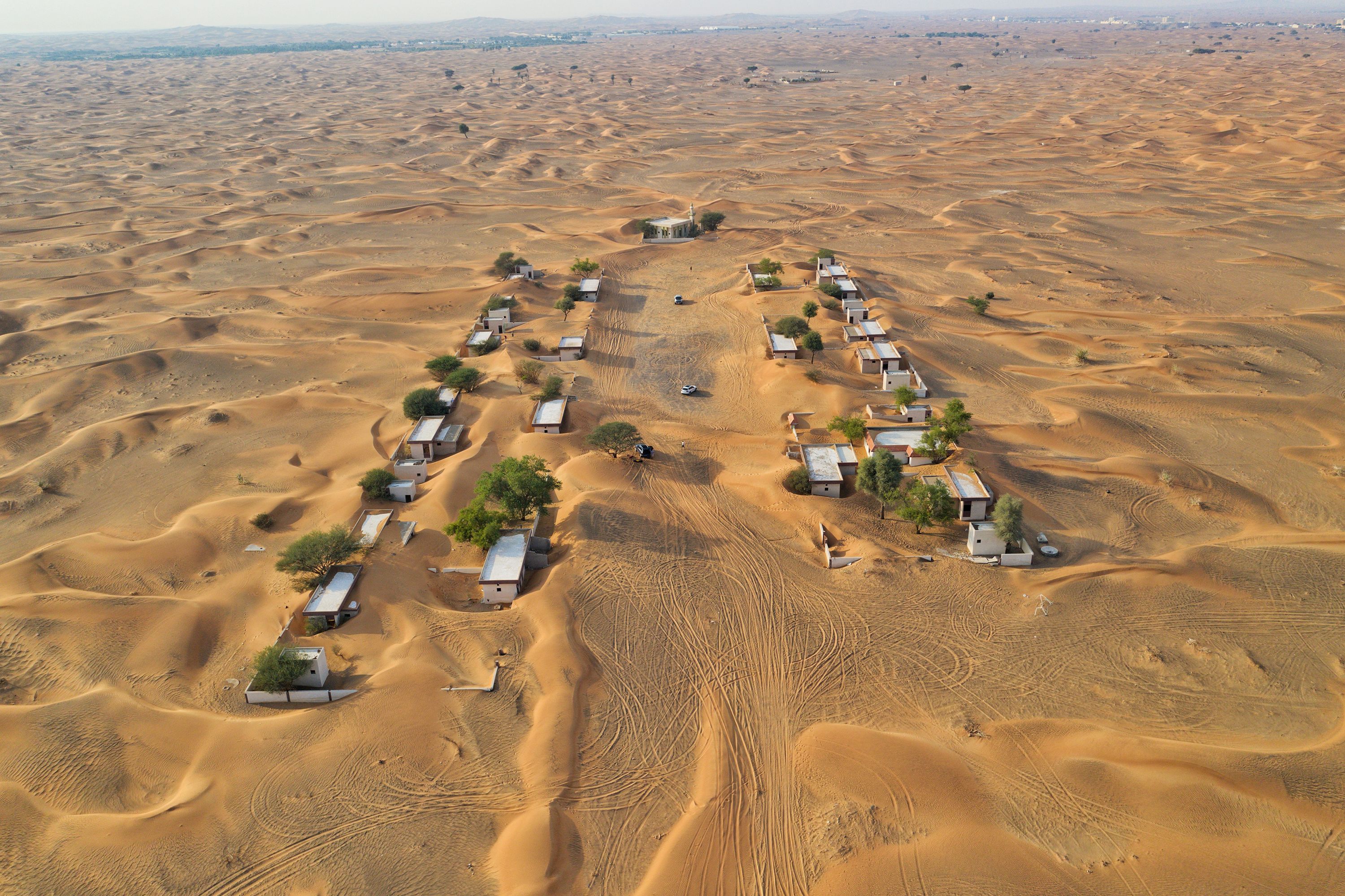
Perhaps the UAE’s most recognizable abandoned village is the Al Madam Buried Village in Sharjah’s Central Region.
Often photographed with sand dunes spilling through empty doorways and windows, this small settlement looks as though the desert is gradually reclaiming it.
According to Visit Sharjah, the village was built as part of a public housing project after the formation of the UAE in 1971. It housed members of a Bedouin community that had previously lived a semi-nomadic lifestyle.
The settlement was eventually abandoned. Difficult natural conditions, including desert winds and constantly shifting sand, are commonly cited as factors that made life there increasingly difficult.
What Makes Al Madam Special?
The striking combination of:
- Abandoned houses
- Desert dunes
- Empty rooms
- Partially buried structures
- Remote surroundings
makes Al Madam particularly popular with photographers and adventure travellers.
The location has also inspired numerous fictional stories and legends. However, visitors should distinguish these imaginative tales from the documented history of the village.
Best for: Photography, history, desert exploration and unusual UAE experiences.
2. Al Jazeera Al Hamra, Ras Al Khaimah
If Al Madam represents a village being reclaimed by the desert, Al Jazeera Al Hamra represents a community shaped by the UAE’s maritime past.
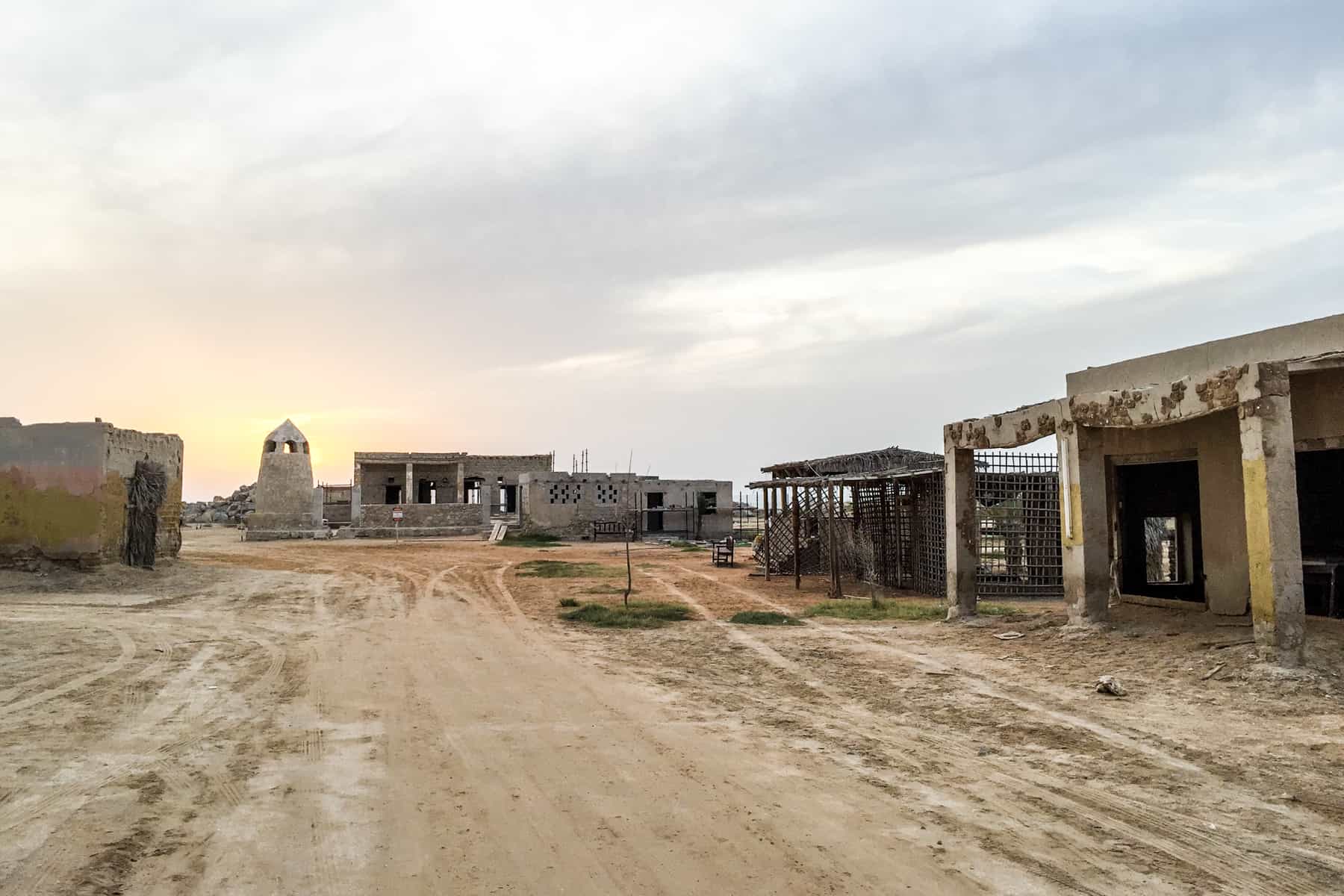
Located in Ras Al Khaimah, this historic settlement is widely regarded by the emirate’s tourism authorities as the UAE’s last surviving traditional pearling village.
The settlement was associated with the Za’ab tribe and developed around traditional coastal livelihoods including:
- Pearl diving
- Fishing
- Boat building
- Date farming
At its height, the village contained around 500 houses along with a mosque, souq, fort, watchtowers and traditional courtyard homes.
The houses were constructed using locally available materials such as coral blocks, fossilized beach rock, mangrove wood and date-palm materials.
Why Was Al Jazeera Al Hamra Abandoned?
The village’s residents left between 1968 and 1971, during a period when oil wealth and modernization were transforming life across the UAE.
Today, the abandoned buildings provide a remarkable picture of pre-oil Emirati coastal life.
Look closely and you can find:
- Traditional wind towers
- Courtyard houses
- Old mosque structures
- Narrow lanes
- Pearl merchant residences
- Fortifications
- Traditional architectural details
The village is also on the UNESCO World Heritage Cultural Tentative List.
Important Visitor Note
Al Jazeera Al Hamra contains fragile and potentially unstable structures. Visitors are advised not to climb on or enter unsafe buildings, remove anything from the site, or visit after dark.
Best for: History, architecture, photography and cultural tourism.
3. Old Nahwa Village, Sharjah
Another fascinating example can be found in the mountains of Sharjah.
Nahwa is famous not only for its abandoned original village but also for its unusual geographical status.
Nahwa is a counter-enclave: it belongs to Sharjah but is surrounded by Oman’s Madha enclave, which itself is surrounded by the UAE.
The original Nahwa village was abandoned in 1999, when residents moved to New Nahwa, developed nearby along Wadi Shis.
The surrounding landscape is dramatically different from the desert setting of Al Madam.
Visitors can find:
- Rocky mountains
- Date-palm plantations
- Wadis
- Freshwater pools
- Hiking opportunities
- Camping areas
The relocation of the village makes Nahwa an interesting example of how communities can move while maintaining their connection to the surrounding landscape.
Best for: Mountain scenery, geography, hiking and cultural exploration.
4. Old Shees Village, Sharjah
Shees, located in the Hajar Mountains, offers another perspective on traditional settlement history.
The old village dates back to the pre-oil era and reflects the close relationship between mountain communities and their environment.
One of its most important historical features is its traditional falaj irrigation system, which Sharjah’s tourism authority dates back approximately 3,000 years.
The old village contains traditional mud-brick houses, narrow pathways, a mosque and other structures.
Unlike completely abandoned ghost towns, however, Old Shees is currently undergoing restoration and conservation. The project includes work on traditional roofs, walls, pathways and the historic falaj system.
This makes Shees particularly interesting for travellers who want to see how the UAE is preserving traditional mountain heritage rather than simply exploring abandoned ruins.
Best for: Heritage, architecture, mountain landscapes and cultural tourism.
5. Shimal’s Old Stone Houses, Ras Al Khaimah
For travellers interested in historic rural architecture, the Shimal Stone Houses in Ras Al Khaimah provide another window into traditional life.
These old summer houses stood within date-palm gardens, and builders used wadi stones and mortar to construct them.
Their architecture shows how traditional builders adapted homes to withstand the UAE’s climate.
Some structures featured barjeel, or windcatchers, which ventilated interiors and created cooler living spaces.
The surrounding gardens historically provided summer residents with important sources of food and water.
However, this site does not function as a conventional tourist “ghost town.” The Department of Antiquities and Museums controls access, and visitors may enter only when accompanied by a team member.
Best for: Archaeology, traditional architecture and heritage enthusiasts.

Why Did People Leave These UAE Villages?
There wasn’t one single reason why UAE settlements were abandoned.
1. Economic Transformation
The discovery of oil accelerated economic and infrastructural change across the UAE. Traditional occupations such as pearl diving declined, while modern employment opportunities became increasingly important.
Al Jazeera Al Hamra is a strong example of this transformation.
2. Environmental Challenges
Desert communities had to cope with:
- Moving sand dunes
- Extreme heat
- Limited water
- Difficult transportation
- Harsh natural conditions
At Al Madam, the movement of desert sand was an important factor in making the settlement difficult to maintain.
3. Modern Infrastructure
Improved roads, electricity, water systems, healthcare and housing encouraged many communities to move into newer settlements.
4. Changing Lifestyles
Traditional livelihoods gradually gave way to modern professions and urban lifestyles.
The result was not simply the disappearance of communities but a major transformation in how people lived.
UAE Ghost Towns vs Heritage Villages
It is important to understand the difference.
| Type | Example | Current Character |
| Abandoned village | Al Madam | Desert-covered ruins |
| Abandoned heritage settlement | Al Jazeera Al Hamra | Historic village with preserved ruins |
| Relocated village | Old Nahwa | Original settlement abandoned |
| Restored old village | Shees | Conservation and restoration |
| Archaeological site | Shimal | Controlled heritage access |
Calling every historic village a “ghost town” can oversimplify its history.
Some locations are abandoned, some are being restored, and others remain part of living communities.
Best Time to Explore UAE Abandoned Places
The cooler months from approximately October to April are generally more comfortable for outdoor exploration.
Best Times of Day
Early morning:
Ideal for cooler temperatures and softer light.
Late afternoon:
Good for photography, especially at desert locations.
Avoid spending extended periods outdoors in peak summer heat.
Safety Tips for Exploring UAE Ghost Towns
Abandoned buildings can be visually fascinating, but they may also be structurally unsafe.
Follow these precautions:
- Do not enter unstable buildings.
- Never climb damaged walls or roofs.
- Stay on permitted routes.
- Carry sufficient drinking water.
- Wear closed, comfortable footwear.
- Use sun protection.
- Avoid isolated locations alone.
- Check road and weather conditions before travelling.
- Follow signs and local authority instructions.
- Do not remove stones, artefacts or other objects.
- Avoid disturbing wildlife.
- Visit restricted archaeological sites only with authorized access.
At Al Jazeera Al Hamra, for example, official visitor guidance specifically warns against entering or climbing unstable structures and recommends visiting during daylight.
Photography Tips for UAE Abandoned Villages
These locations can produce striking photographs without requiring elaborate equipment.
Try:
Golden hour: Capture warm sunlight across old walls and desert sand.
Doorway compositions: Use abandoned entrances to frame the landscape.
Architectural details: Photograph wind towers, arches, plasterwork and traditional building materials.
Wide-angle landscapes: Show the contrast between abandoned structures and surrounding desert or mountains.
Most importantly, photograph responsibly and avoid damaging fragile structures.
Why Are UAE Ghost Towns Worth Visiting?
The biggest attraction isn’t simply the mystery surrounding abandoned buildings.
These places tell the story of how the UAE changed from traditional desert, mountain and coastal communities into one of the world’s most modern countries.
Al Madam tells a story of desert life and environmental challenges.
Al Jazeera Al Hamra preserves memories of pearl diving and coastal communities.
Old Nahwa demonstrates community relocation in a remarkable geographical setting.
Shees and Shimal reveal how traditional architecture, water management and agriculture helped communities survive in challenging environments.
Together, they provide a more complete picture of the UAE beyond skyscrapers and modern attractions.
Frequently Asked Questions
Are there really ghost towns in the UAE?
Yes. The UAE has several abandoned or relocated settlements that are commonly described as ghost towns, including Al Madam and Al Jazeera Al Hamra.
What is the most famous abandoned village in the UAE?
Al Madam Buried Village ranks among the UAE’s most recognizable abandoned places, with desert sand partially covering its houses.
Why was Al Jazeera Al Hamra abandoned?
Its residents left between 1968 and 1971 during a period of rapid modernization and economic transformation in the UAE.
Can tourists visit UAE abandoned villages?
Some sites welcome visitors as heritage or tourism destinations, but access varies. Authorities restrict entry to certain archaeological sites, and visitors should avoid entering unsafe buildings.
Is Al Madam Buried Village safe to visit?
It is a remote desert location, so visitors should take appropriate precautions, use suitable vehicles and avoid entering unstable structures.
Final Thoughts
The UAE’s abandoned villages and ghost towns offer a fascinating alternative to the country’s modern tourist attractions.
From the sand-covered homes of Al Madam to the coral-stone houses of Al Jazeera Al Hamra, these forgotten places preserve stories of communities, traditional livelihoods, architecture and a rapidly changing nation.
For travellers interested in UAE history, heritage tourism, photography, architecture and unusual places to visit in the UAE, these destinations provide an opportunity to discover a quieter and more historical side of the country.
Plan your UAE heritage journey with CityLaila and combine cultural attractions, desert experiences, sightseeing, transfers and customized tours for a more complete UAE travel experience.
You may also like –
Best Eco-Tourism Experiences in the UAE
Hiking Trails Worth Exploring in the UAE
UAE Heritage Villages Worth Visiting
Discover the UAE’s Pearl Diving Heritage
CityLaila Travel Team
Our travel experts research and curate guides for attractions and experiences across 40+ destinations worldwide.